The Definitive Guide to Islamic Prayer Beads (Misbaha), Digital Tasbeeh Counters, and Daily Dhikr Traditions
From handcrafted olive-wood rosaries in ancient Damascus to wearable Bluetooth smart rings in the courtyards of Makkah and Madinah, counting the remembrance of Allah is one of the most enduring spiritual rituals in Muslim daily life.
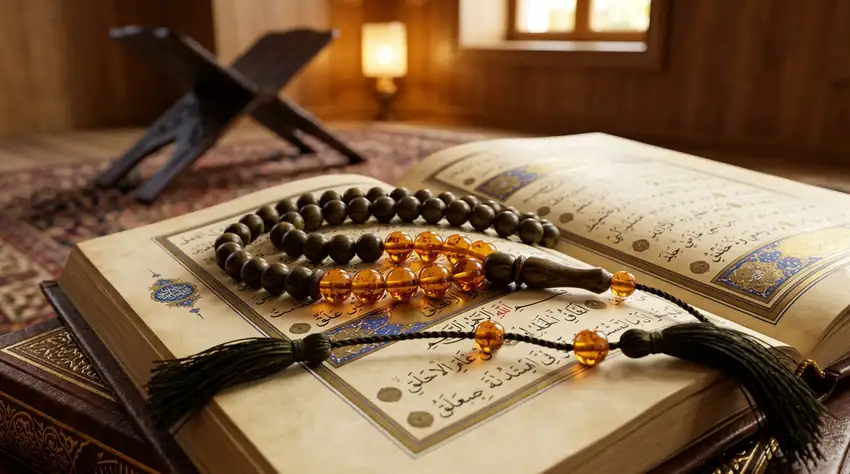
1. The Spiritual Essence of Dhikr in Islamic Tradition
In the Islamic faith, Dhikr (the conscious remembrance of Allah) is not merely a ritualistic repetition of words, but the lifeblood of spiritual vitality. The Holy Quran repeatedly emphasizes constant remembrance across numerous verses, declaring: “O you who have believed, remember Allah with much remembrance and glorify Him morning and evening.” (Surah Al-Ahzab, 33:41-42).
The term Tasbeeh (or Tasbih) specifically describes the glorification of Allah by exclaiming Subḥān Allāh, which signifies affirming that the Almighty is completely free from any imperfection, deficiency, partner, or human limitation. When combined with Taḥmīd (declaring Al-ḥamdu lillāh) and Takbīr (declaring Allāhu Akbar), it forms the classical triumvirate of Islamic praise that has echoed through mosques, desert caravans, and pilgrim pathways for over fourteen centuries.
2. The Historical Evolution: From Date Stones to Smart Rings
The physical means by which believers have maintained count of their recitations has evolved through four major historical epochs:
🌱 Phase 1: Date Stones & Pebbles (1st Century AH)
During the era of the Prophet Muhammad (peace be upon him) and the Companions, worshipers gathered smooth river pebbles or dried date seeds to track large counts of Tasbih and Istighfar without losing focus.
📿 Phase 2: The Classical Misbaha (8th–19th Century)
Strung beads with separator markers (*Shahed*) emerged in Damascus, Cairo, Istanbul, and Isfahan. Crafted from amber, sandalwood, and pressed clay, the 33-bead and 99-bead subha became an iconic Islamic art form.
🔘 Phase 3: Mechanical Tally Clickers (Late 20th Century)
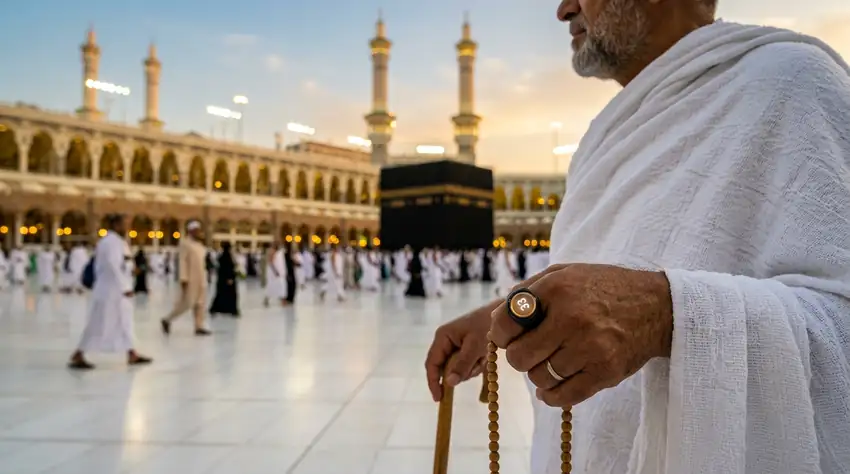
Handheld steel mechanical tally counters were adapted by pilgrims in South Asia and the Middle East for one-handed operation during long walks, Ramadan Taraweeh, and busy market transits.
💍 Phase 4: Digital Smart Rings & Web Apps (21st Century)
Today, electronic finger rings with OLED screens, Bluetooth prayer time sync, vibration alerts, and browser-based 3D counters allow seamless tracking in any setting without requiring physical beads.
3. Detailed Islamic Jurisprudence (*Fiqh*): Scholarly Opinions on Counting Tools
The question of how to count Dhikr has been thoroughly analyzed by prominent classical and contemporary Islamic jurists. The consensus across the four Sunni legal schools (*Hanafi, Maliki, Shafi'i, Hanbali*) is summarized as follows:
1. The Optimal Practice (*Al-Afdal*): Counting on the Right Hand
The authentic Sunnah of the Prophet Muhammad (peace be upon him) was to count on his right hand. Abdullah ibn Amr (may Allah be pleased with him) reported: “I saw the Messenger of Allah (pbuh) counting the glorification on his right hand.” (Sunan Abi Dawud 1502). Scholars agree this remains the superior method because the physical limbs of the human body will speak and bear witness to righteous deeds on the Day of Resurrection.
2. The Permissibility of Beads, Clickers & Digital Devices (*Ja'iz*)
Imam Jalaluddin as-Suyuti authored an entire treatise entitled Al-Minhah fi al-Subhah (“The Gift Concerning the Prayer Beads”) proving the permissibility of counting instruments based on early Companions such as Abu Hurairah (who used a knotted cord with 2,000 knots) and Safiyyah (who counted with pebbles). Contemporary fatwa councils, including Al-Azhar and the Saudi Council of Senior Scholars, state that digital counters are beneficial aids that prevent mental distraction and doubt (*waswas*).

4. Structured Daily Dhikr Routine for Every Time of Day
Here is an authentic schedule to maximize your daily spiritual rewards using your digital tasbeeh counter:
5. Pilgrimage Application: Tracking Tawaf & Sa'i in Makkah
Performing the rituals of Umrah requires intense concentration in the midst of large crowds. Using the digital tasbeeh counter set to a Goal of 7 provides effortless verification:
- 7 Circuits of Tawaf: Start aligned with the Black Stone (*Hajar al-Aswad*), tap the counter at each lap completion, and finish cleanly on Lap 7 before praying 2 rak'ahs behind Maqam Ibrahim. Review our visual [Umrah Journey Roadmap](#roadmap) for step-by-step guidance.
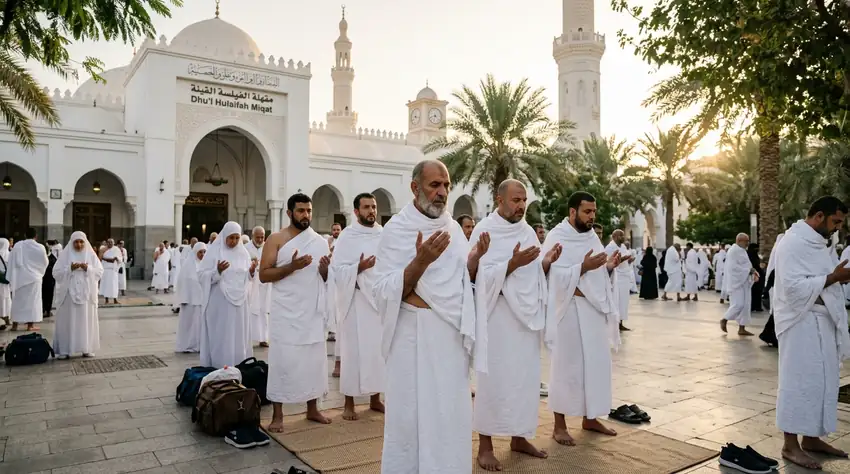
- 7 Laps of Sa'i: Begin at Safa (Lap 1), walk to Marwah (Lap 2), and complete your 7th lap at Marwah before proceeding to hair trimming (*Tahallul*). Read our [Ihram Rules & Miqat Boundaries Guide](#article/ihram-rules-miqat-guide).
- Budgeting & Logistics: Plan your complete flight, hotel, and Haramain train expenses in your home currency using our [Master Umrah Cost Calculator](#calculator/master).